


The Woman Who Dared
Le Ciel est à vous
Jean Grémillon
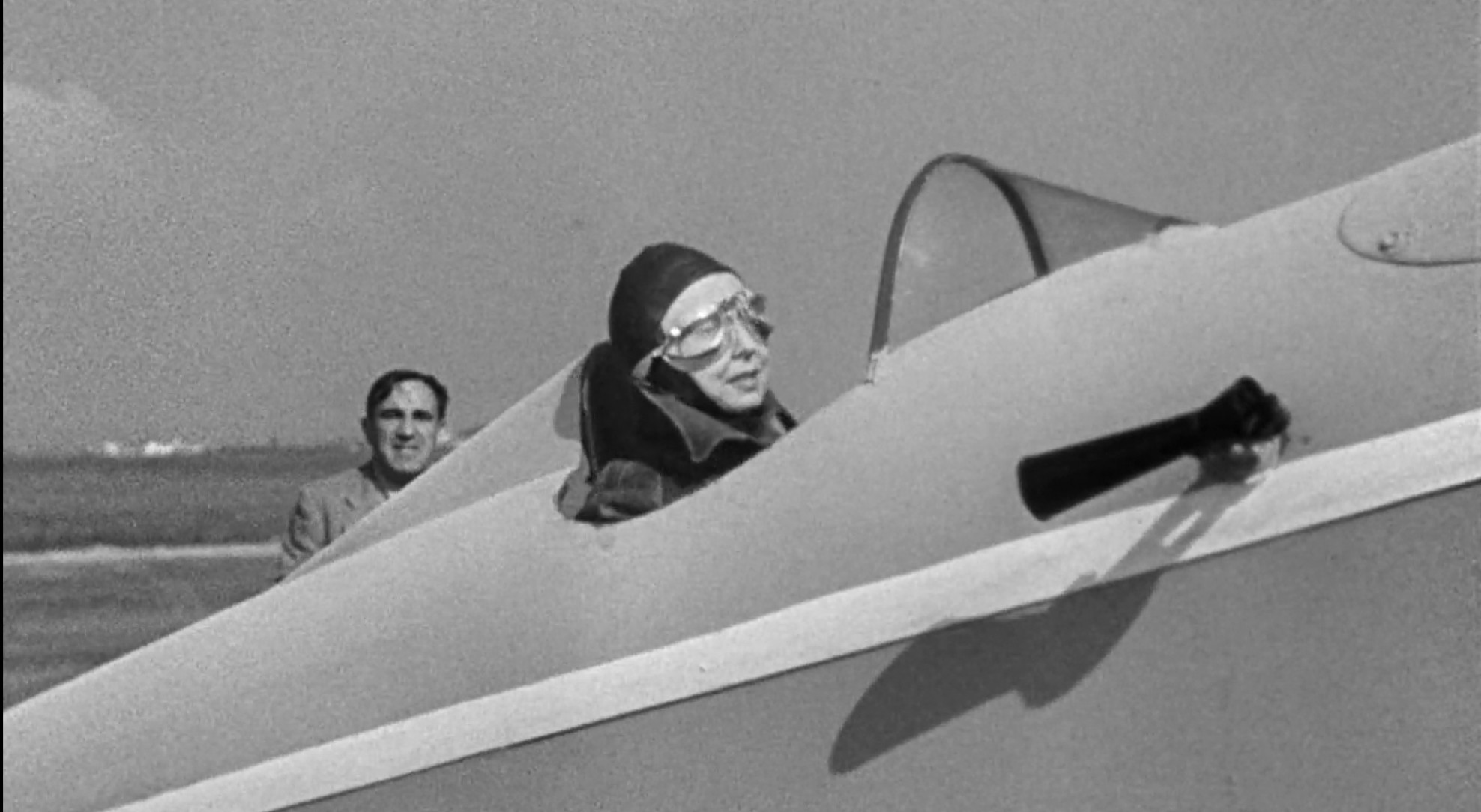
© 1944 TF1 Droits Audiovisuels
Pierre and Thérèse Gauthier are evicted from their garage in Villeneuve to make way for an aerodrome. Once they have settled in town, Pierre’s business is going well, but drawn back to his passion for flying, he gradually neglects both his work and his family. Thérèse is furious at first, but eventually allows herself to be swept up in her husband’s enthusiasm. Consumed by this shared passion, they buy an aeroplane, which Thérèse flies with great skill. With Pierre’s support, she even begins to dream of breaking the distance record set by Lucienne Ivry. Thérèse takes off, crosses the Mediterranean, but disappears without trace.
Cast : Madeleine Renaud, Charles Vanel, Jean Debucourt, Raymonde Vernay, Léonce Corne, Raoul Marco, Albert Rémy
Scenario: Albert Valentin, Charles Spaak
Cinematography: Louis Page
Editing: Louisette Hautecoeur
Music: Roland Manuel
Scenario: Albert Valentin, Charles Spaak
Cinematography: Louis Page
Editing: Louisette Hautecoeur
Music: Roland Manuel
Production : Les Films Raoul Ploqui
Distribution : Les Acacias
Distribution : Les Acacias
What is passion? At what point does it become all-consuming? Does it necessarily come at the expense of one’s personal life?" These are the questions raised in Le Ciel est à vous (The Woman Who Dared), Jean Grémillon’s fourteenth film, which explores, of course, a passion for aviation. This love of flying is shared by Thérèse (Madeleine Renaud) and Pierre Gauthier (Charles Vanel), modest garage mechanics in the fictional village of Villeneuve. At first glance, the picture is idyllic: the Gauthiers are a loving, hard-working couple, devoted to their children’s wellbeing. But this apparent balance is soon jeopardised by their aerial acrobatics. The more their passion grows, the more the couple lose touch with everyday life, spending ever more money and eating into their children’s inheritance. (…) But this film is ultimately about love, and Thérèse would not break all her records without her husband’s support. Is there a man behind every great woman? A rare and welcome reversal of roles, whilst the Villeneuve town council reminds us of the sad reality of the era: that old Pétainist France relegating women to the status of mere furnishings. An intolerable stance condemned by Grémillon, spokesperson for women and their wildest dreams. These dreams are also those of people of modest means, for whom the road ahead will be even longer, as they lack the financial means or the social conventions of the bourgeoisie. At Marseille aerodrome, the aviator Lucienne Ivry is celebrated by the committee whilst the Gauthiers watch them from behind a window, a scene that clearly illustrates this glass ceiling. And why shouldn’t the skies belong to them too?"" (Esther Brejon; Revus & Corrigés n° 12)