


Norma Rae
Martin Ritt
© Park Circus, Disney
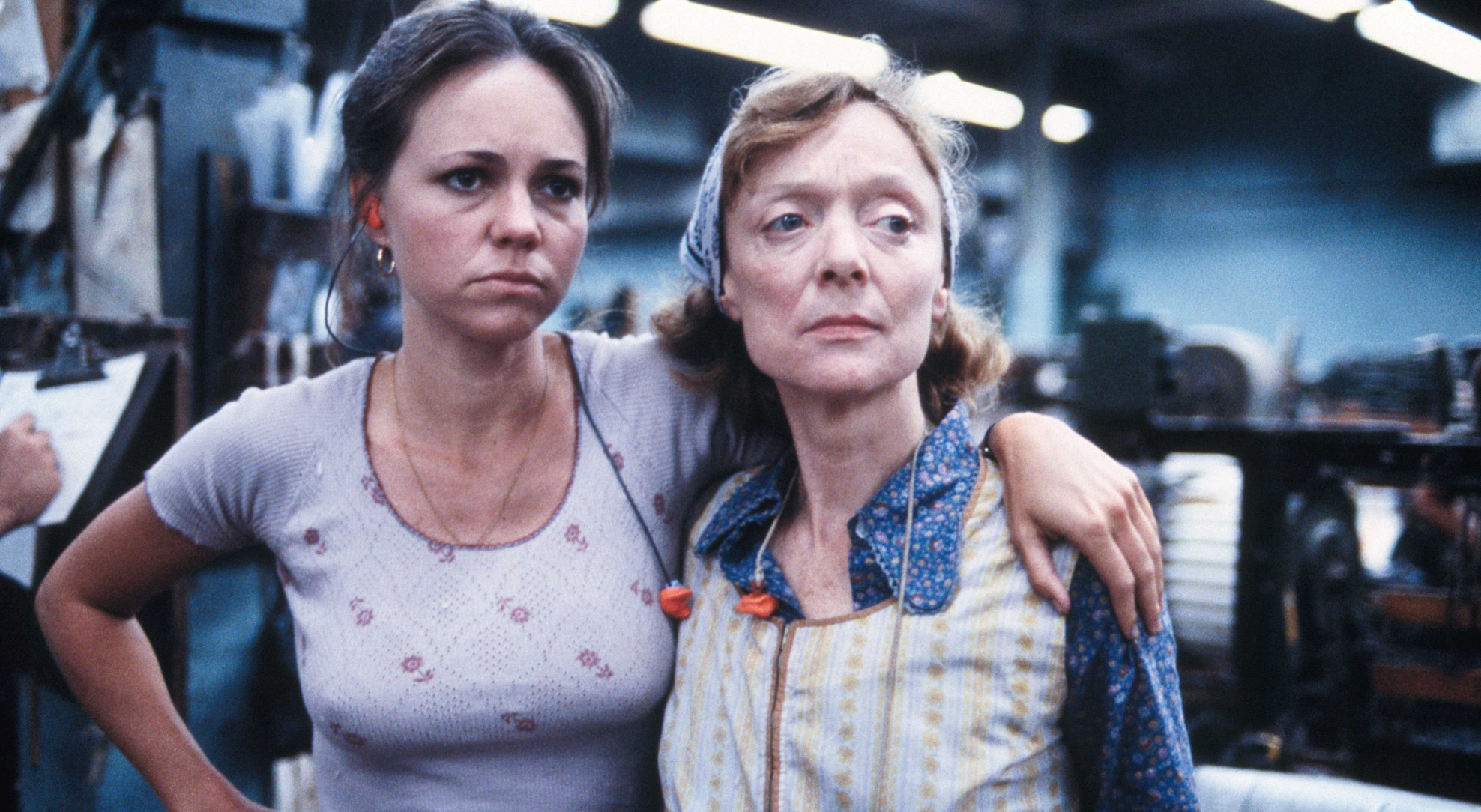
A young single mother, who works in the textile industry, is reluctant to agreeing to help set up a trade union at her factory, due to the problems and risks involved.
Cast : Sally Field, Beau Bridges, Ron Leibman, Pat Hingle, Barbara Baxley, Gail Strickland
Scenario: Irving Ravetch, Harriet Frank Jr.
Cinematography: John A. Alonzo
Editing: Sidney Levin
Music: David Shire
Scenario: Irving Ravetch, Harriet Frank Jr.
Cinematography: John A. Alonzo
Editing: Sidney Levin
Music: David Shire
Production : 20th Century Fox
Distribution : Park Circus
Distribution : Park Circus
Norma Rae tells the story of a young factory worker’s awakening to trade unionism in a small town in the heart of the United States. On the one hand, we follow the long process and journey leading to unionisation through the development of a social conscience that this young widow already had within her, as she is ‘coached’ by an affable, intelligent, loyal and cultured trade union representative from New York. On the other hand, the film paints a touching and accurate portrait of a woman, as well as an astonishingly perceptive portrayal of a North Carolina community whose attitudes remain rooted in a traditionalism that views changing social mores with disfavour, whilst sexism, racism and anti-Semitism are still deeply ingrained; men and women who are resigned and exhausted by gruelling working conditions but who, too, will develop a collective consciousness that breaks with this system which crushes their health and dignity by sacrificing everything to productivity. (…) The film’s most memorable scene paradoxically becomes increasingly silent as it progresses, Norma Rae climbing onto a table with a placard bearing the word ‘Union’ held aloft in her raised arms, the workers in turn stopping their machines until the deafening noise gradually subsides, silence taking over of its own accord, and for the first time the factory buildings finally becoming ‘liveable’. A fine example of a masterfully controlled, well-paced and sustained build-up of emotional tension; in keeping with the film, everything is done with restraint."" (Erick Maurel; dvdclassik.com)