


Tous les matins du monde
Alain Corneau
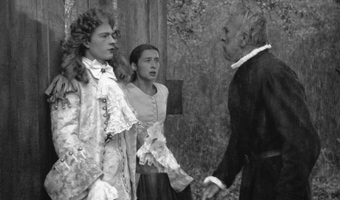
Viola da gamba player Marin Marais, at the end of his life, remembers his master, Sainte-Colombe. He is a strict and austere Jansenist who seeks perfection in all things. At his side, Marin Marais learns to play the viol, and also falls in love with Madeleine, his master's daughter. But the ambitious and frivolous Marais leaves Sainte-Colombe for the splendours of Versailles...
With : Jean-Pierre Marielle, Gérard Depardieu, Anne Brochet, Guillaume Depardieu
Screenplay : Alain Corneau, Pascal Quignard (d'après le roman éponyme de Pascal Quignard)
Image : Yves Angelo
Sound : Pierre Gamet
Editing : Marie-Josèphe Yoyotte
Decors : Bernard Vézat
Music : Jordi Savall
Screenplay : Alain Corneau, Pascal Quignard (d'après le roman éponyme de Pascal Quignard)
Image : Yves Angelo
Sound : Pierre Gamet
Editing : Marie-Josèphe Yoyotte
Decors : Bernard Vézat
Music : Jordi Savall
Production : Film par Film, Divali Films, DD Productions, SEDIF, FR3 Cinéma, Paravision International, Canal +
Distribution: Tamasa Distribution
Distribution: Tamasa Distribution
Alain Corneau's adaptation of Tous les matins du monde (All the Mornings of the World) proves very faithful to the very pure, refined language of the film's co-writer. After Nocturne indien (1989), based Antonio Tabucchi's novel, Alain Corneau took the opportunity of once again expressing a pictorial point of view and a taste for a journey of initiation. But above all, it is 17th century French music which is at the heart of Tous les matins du monde. Composer Jordi Savall chose baroque music for the essential parts of the film, and recreated for the occasion some rare pieces written by Sainte-Colombe, a neglected composer that he adapted so as to oppose his music to Marin Marias'. In this film Guillaume and Gérard Depardieu are acting for the first time together on screen, but without ever appearing together as they both play Marin Marais at different times in his life.