


Signs of Life
Lebenszeichen
Werner Herzog
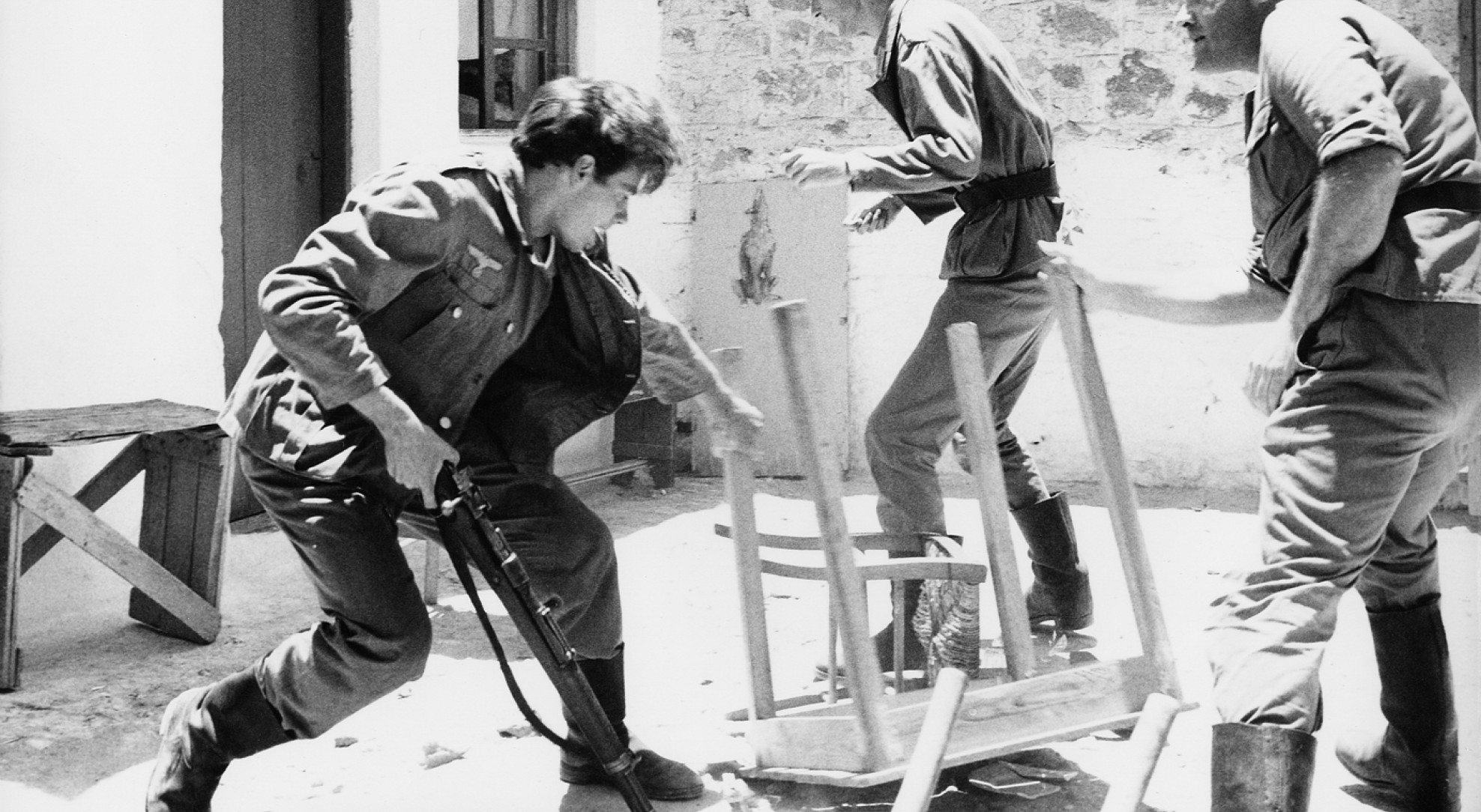
© Potemkine Films
During the Second World War, a young German soldier called Stroszek is wounded. He is sent to convalesce in a fortress in Crete. He tries to kill time in the company of his wife and two other soldiers. But the wait is interminable and Stroszek gradually begins to lose his mind.
Cast : Peter Brogle, Wolfgang Reichman, Athina Zacharopoulou, Wolfgang von Ungern-Sternberg, Wolfgang Stumpf
Scenario : Werner Herzog
Cinematography : Thomas Mauch
Editing : Beate Mainka-Jellinghaus
Music : Stavros Xarhakos
Scenario : Werner Herzog
Cinematography : Thomas Mauch
Editing : Beate Mainka-Jellinghaus
Music : Stavros Xarhakos
Production : Werner Herzog Filmproduktion
Distribution : Potemkine Films
Distribution : Potemkine Films
If Herzog has come to shoot in Kos it is not just to explore the places where his grandfather worked, but also because he is fascinated by the idea of deciphering signs, and Greece is full of traces from the dawn of Western civilisation. The idea behind Signs of Life is that the world is indecipherable: we think we can unravel its secrets and mysteries, discover what lies behind appearances, understand the course of history... but in the end, we realise that nothing makes sense. It is therefore a question of accepting this situation and living, clinging to signs that can only lead to madness, like Herzog’s grandfather, like Woyzeck, like Stroszek. The soldier Stroszek appears in the film in a state of shock, wounded. He enters the drama as if in a dream. The camera is moving, the faces are distorted, enlarged. A chaotic tracking shot travels through the alleyways of the city to the place where his wounded body lies. Two goats get off a bus... the atmosphere is strange, unreal, disturbing. (Olivier Bitoun; dvdclassik.com)